
Art + Precision = Extraordinary
A unique and tested process developed over decades by the most talented American bladesmiths. Creating rugged elegance in a unique collectible tool.
Larry’s Approach
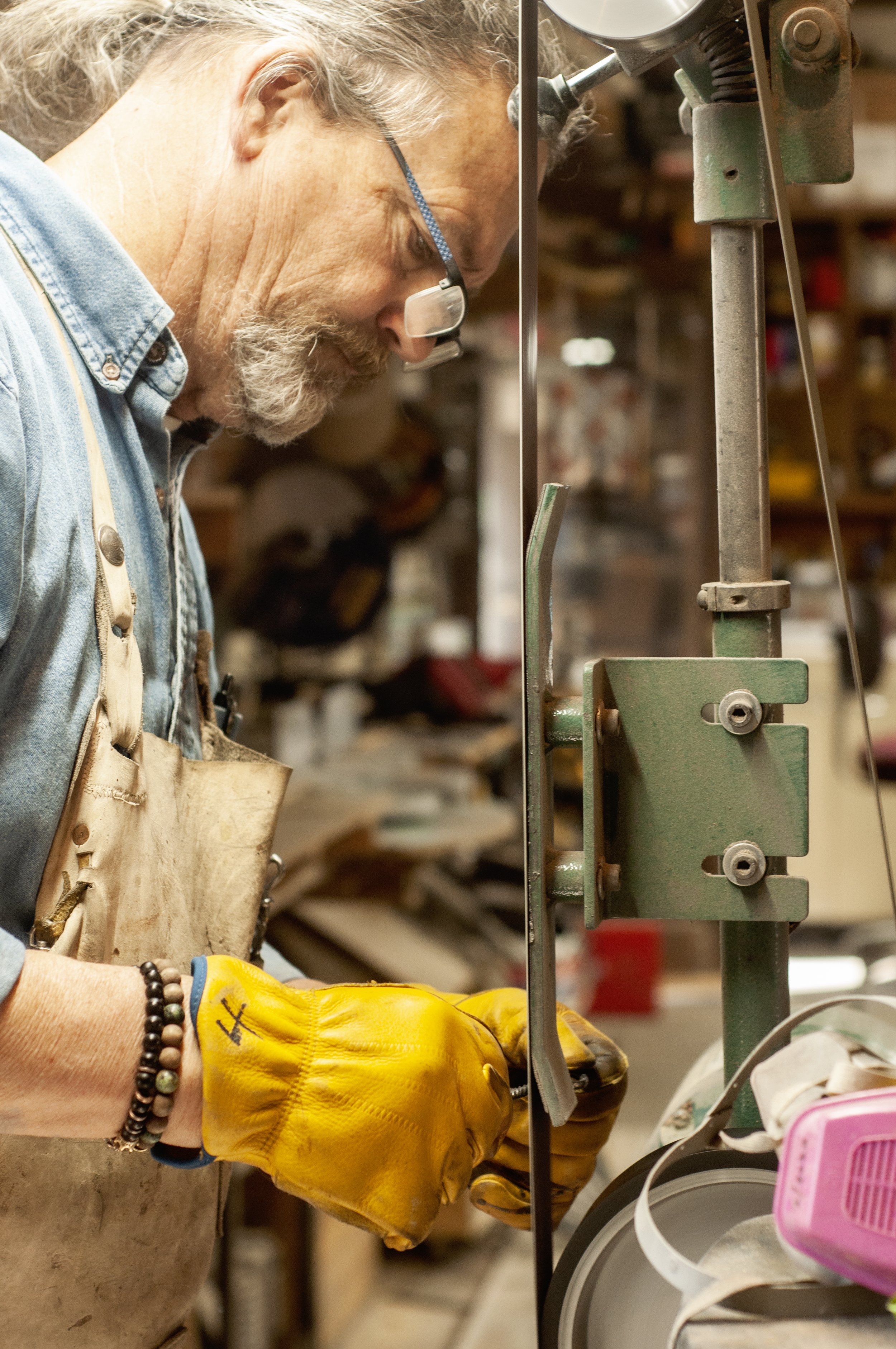
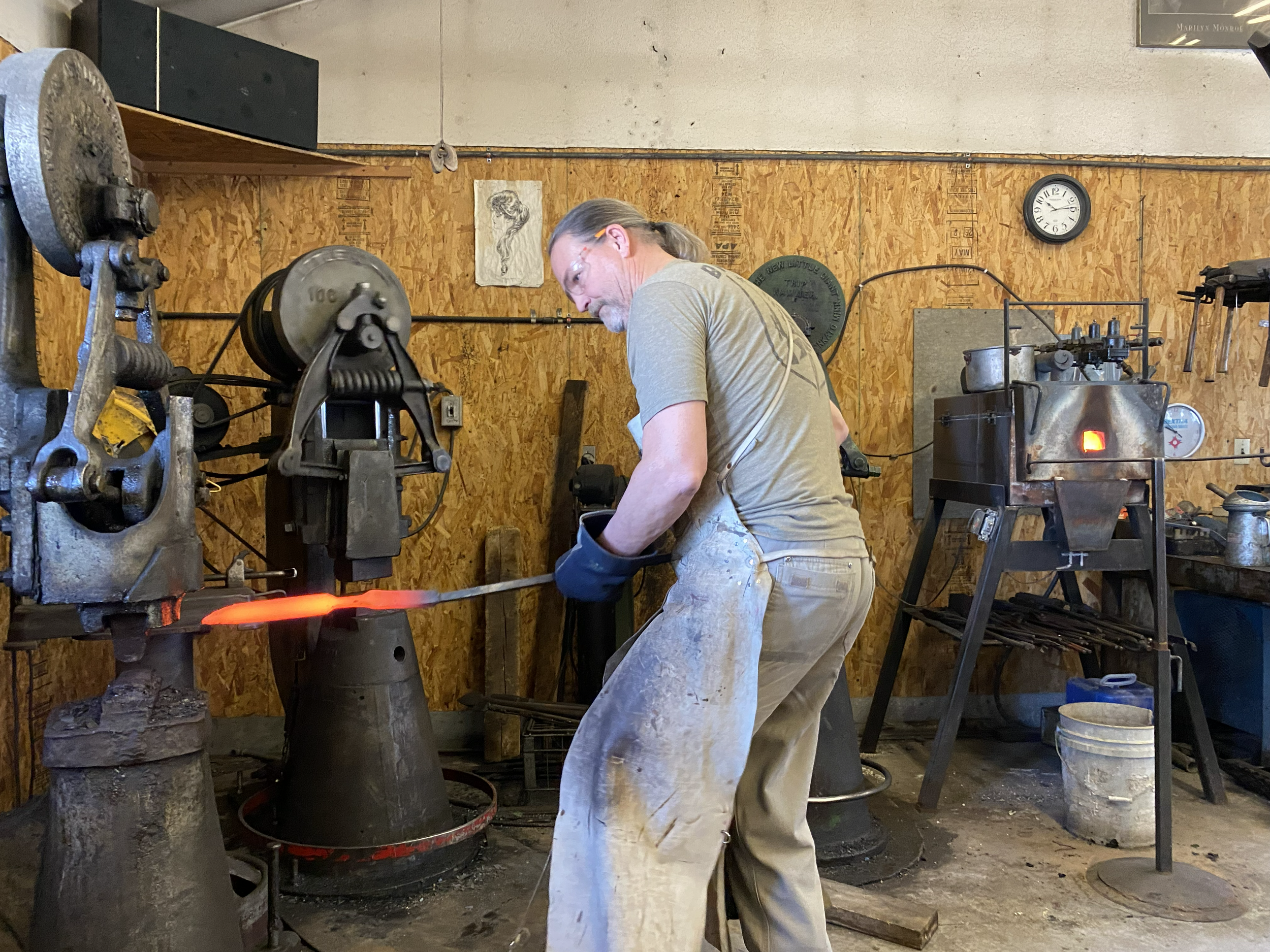
While studying the art of knife making under the tutelage of Ed Fowler, Larry Davis established himself as one of the most knowledgeable and skilled craftsmen in the custom knife market. The custom sheaths are handmade by Larry. Often, buyers opt for a custom-made display stand. The truth of the matter is that although these blades are highly functional, they are generally displayed. Each is a distinctive, heirloom-quality testament to the art of knife making, crafted over a 30-hour process.
Forging
The forging process is an art and the first critical element in quality bladesmithing. Forging serves three basic functions key to blade integrity. First, throughout the repetitive heating and forging process, the artisan continually manipulates the steel to refine the edge grain structure, an important feature for edge performance. Secondly, the artisan is shaping the blade outline while tapering the blade spine to the edge and tang to the tip. Effectively shaping the blade during forging that will save time in finish grinding. And thirdly, serves a more important role in allowing a greater proportion of the continuous longitudinal grain structure within the steel to reside in the finished blade. Forging prevents the radical termination of grain structure, particularly at the blade tip and where the blade transitions to the tang.
Heating Treating
Effective heat treating is all about creating appropriate molecular changes within the steel while minimizing internal stress. Our methods are a methodical sequence of successive heat-treating processes that coax the steel into a state of “contentment” with its final forged shape, resulting in a stress-free blade properly prepared for finish grinding. Five distinct heat-treating processes are employed throughout the process, each in sets of three.
Shaping and Polishing
The forged shape is edge-profile ground and roughly contoured before the edge is flame-hardened and tempered. Once the edge is hardened, the blade is ready to be final-shaped and tested for edge-cutting ability. At this point, the blade tip must withstand being forced into metal without deflecting, and the edge must cleanly shear ½” hemp rope multiple times. After passing this test, the blade is final ground. The blade is etched to reveal grain structure and heat patterns, and may additionally be etched for aesthetic purposes. Finally, the blade is polished and ready to accept its finger guard.
Finger Guard and Handle Detail
A knife that “bites” you during heavy work will not be used long. All Davis Forged Knives have a finger guard to prevent a hand from slipping onto a very sharp edge. Our finger guards are press-fit in place and silver-soldered for permanent seating. Once the finger guard is in place, the knife is stamped with a serial number. The handle is generally comprised of combinations of the base handle material (antler or wood), leather, and brass. These materials complement each other and create an interesting, pleasing look. Once all handle materials are in place, the finger guard and handle are sanded to fit the hand and complement the blade's form, resulting in a comfortable “feel” and an artistically pleasing knife. The knife is then polished one last time and is ready to ship.